
Showing posts with label world war 1. Show all posts
Showing posts with label world war 1. Show all posts
Tuesday, July 19, 2011

Thursday, May 5, 2011
Last WWI combat veteran Claude Choules dies aged 110
From the BBC
"The world's last known combat veteran of World War I, Claude Choules, has died in Australia aged 110.
Known to his comrades as Chuckles, British-born Mr Choules joined the Royal Navy at 15 and went on to serve on HMS Revenge."
The number of people with living memory of the war must be dwindling too, it will slip from living memory within 10-15 years i suspect as the 19th century recently did though of course WW1 is an event which remains vivid in our collective memory thanks to the advent of 20th century media technologies.
"The world's last known combat veteran of World War I, Claude Choules, has died in Australia aged 110.
Known to his comrades as Chuckles, British-born Mr Choules joined the Royal Navy at 15 and went on to serve on HMS Revenge."
The number of people with living memory of the war must be dwindling too, it will slip from living memory within 10-15 years i suspect as the 19th century recently did though of course WW1 is an event which remains vivid in our collective memory thanks to the advent of 20th century media technologies.
Thursday, March 3, 2011
Last WWI combatant to mark 110th birthday
From Yahoo News
"World War I's last surviving combatant Claude Choules will celebrate his 110th birthday on Thursday with a low-key party, his son said, describing his father as a reluctant "celebrity" who hates war."
"World War I's last surviving combatant Claude Choules will celebrate his 110th birthday on Thursday with a low-key party, his son said, describing his father as a reluctant "celebrity" who hates war."
Friday, February 18, 2011
How fearless British pilots downed giant German Zeppelins using exploding darts in the First World War
From the Daily Mail
"It was the logical way to take targets that were essentially a massive balloon filled with flammable gas.
When British First World War pilots were asked to take down German zeppelins they did not turn to guns - but a giant exploding dart."
"It was the logical way to take targets that were essentially a massive balloon filled with flammable gas.
When British First World War pilots were asked to take down German zeppelins they did not turn to guns - but a giant exploding dart."
Saturday, December 25, 2010
The 1914 Christmas Truce: A Plum Pudding Policy Which Might Have Ended The War
From the Indy
"The following letter from Private Frederick W. Heath, first printed in The North Mail on 9 January 1915, has been resurrected by researchers at christmastruce.co.uk, which is edited by Alan Cleaver and Lesley Park. Alan says it stands out among the many letters on the site, although research into Private Heath is still ongoing."
"The following letter from Private Frederick W. Heath, first printed in The North Mail on 9 January 1915, has been resurrected by researchers at christmastruce.co.uk, which is edited by Alan Cleaver and Lesley Park. Alan says it stands out among the many letters on the site, although research into Private Heath is still ongoing."
Thursday, November 11, 2010
From trench to tomb: The unknown warrior's journey
From the BBC
"The unknown warrior was carried from a French battlefield 90 years ago, to be laid to rest among kings and statesmen in Westminster Abbey. But how did this symbol of the sacrifice of war come to be chosen?"
"The unknown warrior was carried from a French battlefield 90 years ago, to be laid to rest among kings and statesmen in Westminster Abbey. But how did this symbol of the sacrifice of war come to be chosen?"
Saturday, October 2, 2010
Why does Germany still owe money for the first world war?
From the Guardian
"According to Bild magazine, the first world war will finally end this weekend when Germany pays off the last instalment of the interest it owes on loans it took out in the 1930s to pay £22bn in reparations to the allied powers. The sum would, of course, have been paid off much earlier were it not for Adolf Hitler, who exploited public resentment at the economic crisis caused by said reparations to a) refuse to pay them, and b) kick off a whole other war – leading to a whole other load of reparations. But news that Germany was still paying reparations from 1919 in 2010 does rather prompt the question: what for?"
"According to Bild magazine, the first world war will finally end this weekend when Germany pays off the last instalment of the interest it owes on loans it took out in the 1930s to pay £22bn in reparations to the allied powers. The sum would, of course, have been paid off much earlier were it not for Adolf Hitler, who exploited public resentment at the economic crisis caused by said reparations to a) refuse to pay them, and b) kick off a whole other war – leading to a whole other load of reparations. But news that Germany was still paying reparations from 1919 in 2010 does rather prompt the question: what for?"
Wednesday, September 22, 2010
More unseen photographs from the First World War
From The Indy
"A treasure trove of pictures showing the unknown soldiers of the Somme caused a sensation when it was published here last May. But that was only the beginning of the story..."

"A treasure trove of pictures showing the unknown soldiers of the Somme caused a sensation when it was published here last May. But that was only the beginning of the story..."

Monday, August 23, 2010
British warships sunk 90 years ago found off Estonian coast
From The Guardian
"The wrecks of three British warships sent to forestall a Soviet and German takeover of the Baltic states after 1917's October revolution have been found off the coast of Estonia.
Sonar searches by an Estonian minesweeper have located the remains of the cruiser HMS Cassandra and two Flower Class sloops, HMS Myrtle and HMS Gentian, in deep water near the island of Saaremaa."

"The wrecks of three British warships sent to forestall a Soviet and German takeover of the Baltic states after 1917's October revolution have been found off the coast of Estonia.
Sonar searches by an Estonian minesweeper have located the remains of the cruiser HMS Cassandra and two Flower Class sloops, HMS Myrtle and HMS Gentian, in deep water near the island of Saaremaa."

Thursday, August 19, 2010
The unseen photographs that throw new light on the First World War
From The Indy
"A treasure trove of First World War photographs was discovered recently in France. Published here for the first time, they show British soldiers on their way to the Somme. But who took them? And who were these Tommies marching off to die?"
"A treasure trove of First World War photographs was discovered recently in France. Published here for the first time, they show British soldiers on their way to the Somme. But who took them? And who were these Tommies marching off to die?"
Wednesday, July 14, 2010
World War One official British photographs from the National Library of Scotland
"These photographs form part of the papers of Field Marshal (Earl) Haig (1861-1928), held by the National Library of Scotland. More information is available from the Library's Digital Archive.
Like many World War I generals, Haig remains a controversial figure. The collection contains diaries, papers and photographs from every part of Haig’s career, the Great War diaries being of special importance to historians..."
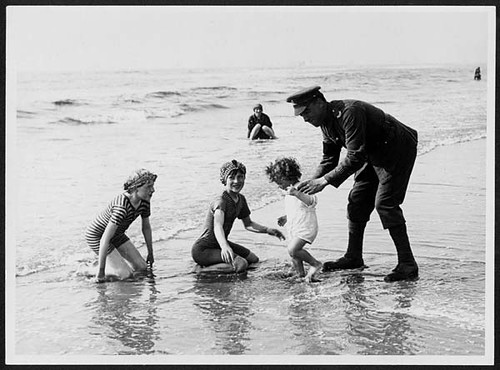
Like many World War I generals, Haig remains a controversial figure. The collection contains diaries, papers and photographs from every part of Haig’s career, the Great War diaries being of special importance to historians..."
Wednesday, June 30, 2010
Kaiser's African Gunship Enjoys New Lease on Life
"Almost 100 years ago, the German Kaiser ordered a warship to be secretly constructed and carried in pieces over mountains to help hold on to Germany's prize African colony. The battered ship is now receiving help from an unlikely source -- the German state where it was first made.
It's really all his grandfather's fault. When Hermann-Josef Averdung was a boy, his grandfather would often tell him about the most wonderful ship he had ever helped build -- and about the great adventure it embarked upon.
Averdung is now 66 years old. His hair is white, and he is a councilman in the northern German city of Papenburg. But the years have not dimmed his memory of this story. The story, in fact, has brought him to where he is now: standing at dawn on a rusty pontoon on Lake Tanganyika, in the heart of Africa. As a large ship slowly glides up alongside the pier, Averdung goes weak in the knees, and tears well up in his eyes. Its name, Liemba, is still visible on the front of the hull..."
It's really all his grandfather's fault. When Hermann-Josef Averdung was a boy, his grandfather would often tell him about the most wonderful ship he had ever helped build -- and about the great adventure it embarked upon.
Averdung is now 66 years old. His hair is white, and he is a councilman in the northern German city of Papenburg. But the years have not dimmed his memory of this story. The story, in fact, has brought him to where he is now: standing at dawn on a rusty pontoon on Lake Tanganyika, in the heart of Africa. As a large ship slowly glides up alongside the pier, Averdung goes weak in the knees, and tears well up in his eyes. Its name, Liemba, is still visible on the front of the hull..."
Thursday, February 11, 2010
U.S. Navy Documentary (1915?)
"Although incomplete, this documentary appears to be the longest surviving nonfiction film about the U.S. Navy dating from before World War I..." (well if its from 1915 as they think it is its not before WW1 but quibbles aside its a very interesting film you can watch online or download as a MPEG movie.)
Monday, November 9, 2009
WW1 submarine found after 93 years
The wreck of HM Submarine E18 has been found after a 10 year search and over 90 years after it was sunk in the Baltic Sea during the First World War. The Captain's hatred of using the boat's toilet facilities while submerged almost resulted in the submarine being sunk. He prefered to relieve himself over the side after ordering the submarine be surfaced in the morning and it was on one of these occaisions the submarine was spotted by a Zeppelin and nearly sunk.
Friday, November 6, 2009
Collector finds unseen Charlie Chaplin film in tin sold for £3.20 on eBay
Morace Park was footling around on eBay looking for antiques when he stumbled on an item that was listed casually as an "old film" – and even then he was really more interested in the tin it was in.
"It had a lovely look to it," said Park. But the contents of the battered container, which he bought for the princely sum of £3.20, have turned out to be a previously unknown film by Charlie Chaplin...

The film may be a propaganda film made during World War 1, it shows Chaplin making fun of Zeppelins which at the time were bombing Britain and causing a lot of terror and anger (if not that much damage).
Update : this article has more details about what is contained in the film.
"It had a lovely look to it," said Park. But the contents of the battered container, which he bought for the princely sum of £3.20, have turned out to be a previously unknown film by Charlie Chaplin...

Update : this article has more details about what is contained in the film.
Saturday, July 18, 2009
World's oldest man dies
Henry Allingham, the world's oldest man has died at the age of 113. He was one of the last surviving veterans of World War 1 and the last survivor from the founder members of the RAF. Now when someone dies at such a great age i am always fascinated by how much "history" they have seen in their lives. Henry was born in 1896 so:
- Despite being a founder member of the RAF was 7 before man actually first took to the air in an aeroplane
- Was 9 when my grandmother was born
- Was 22 when World War 1 ended
- Was nearly 40 when my parents were born
- Was nearly 50 when World War 2 ended
- Was 56 when Queen Elizabeth II came to the throne
- Topically was 73 when men first landed on the moon
- And was 75 when i was born!
Wednesday, May 27, 2009
Revolution!
My next assignment will be on the subject of revolution, it asks if the revolutions in Russia, Germany and Austria-Hungary at the end of World War 1 were because of that war or would they have happened anyway. It is an interesting subject and i think the key question to ask first is what do you mean by "revolution", a word now rather overused.
Relevant to my subject there are two kinds of revolution : political and social. In the three countries/empires in question political revolutions do apply though social revolution, a revolution in how a society operates and grows from top to bottom, applies mainly to Russia and in some ways to Austria-Hungary. It doesn't really apply to Germany even if The Kaiser was deposed. The aristocracy remained in place along with rich businessmen (indeed it is because of the political power and influence of these groups largely that Hitler was able to gain power, but that is a subject for another day).
Political revolution, on the other hand, applies to all. Germany became a republic with a socialist government, Austria-Hungary broke up, and Russia of course became the USSR. There is little doubt that the pressures of war, especially the effect of shortages and restrictions on the civilian population, helped build up the pressure for change. However it is simplistic to say the working class were equally oppressed and impoverished. Indeed many workers did well in the war and saw their wages rise, especially those in vital industries. It was the middle class who suffered, falling incomes, those on fixed incomes especially. However everyone saw their spending power erode in the end as raging inflation and shortages bit in later in the war.
One could argue, however, that there were revolutionary pressures in all three states before the war. Russia had had problems for years, the 1905 revolution for example which saw the Tsar give up some powers before snatching them back and leaving the Duma impotent. Germany had seen the rise of socialism and even from the early 1900s The Kaiser had to use political guile to get his armaments programmes through the Reichstag. Austria-Hungary was a basket case empire which uses the tension between various ethnic groups to maintain cohesion, a policy that was probably bound to fail sooner or later.
It can be no co-incidence that all three states suffered their revolutions within a couple of years of each other. Pressures already existed and the war causes these pressures to keep on building up. Without the war it may have been all three states saw revolution in any case but perhaps of a different (and less violent) kind. That of course is something we will never know for sure.
Relevant to my subject there are two kinds of revolution : political and social. In the three countries/empires in question political revolutions do apply though social revolution, a revolution in how a society operates and grows from top to bottom, applies mainly to Russia and in some ways to Austria-Hungary. It doesn't really apply to Germany even if The Kaiser was deposed. The aristocracy remained in place along with rich businessmen (indeed it is because of the political power and influence of these groups largely that Hitler was able to gain power, but that is a subject for another day).
Political revolution, on the other hand, applies to all. Germany became a republic with a socialist government, Austria-Hungary broke up, and Russia of course became the USSR. There is little doubt that the pressures of war, especially the effect of shortages and restrictions on the civilian population, helped build up the pressure for change. However it is simplistic to say the working class were equally oppressed and impoverished. Indeed many workers did well in the war and saw their wages rise, especially those in vital industries. It was the middle class who suffered, falling incomes, those on fixed incomes especially. However everyone saw their spending power erode in the end as raging inflation and shortages bit in later in the war.
One could argue, however, that there were revolutionary pressures in all three states before the war. Russia had had problems for years, the 1905 revolution for example which saw the Tsar give up some powers before snatching them back and leaving the Duma impotent. Germany had seen the rise of socialism and even from the early 1900s The Kaiser had to use political guile to get his armaments programmes through the Reichstag. Austria-Hungary was a basket case empire which uses the tension between various ethnic groups to maintain cohesion, a policy that was probably bound to fail sooner or later.
It can be no co-incidence that all three states suffered their revolutions within a couple of years of each other. Pressures already existed and the war causes these pressures to keep on building up. Without the war it may have been all three states saw revolution in any case but perhaps of a different (and less violent) kind. That of course is something we will never know for sure.
Thursday, April 30, 2009
What is total war?
A question i am currently wrestling with is, what is "total war"? In my current TMA i am being asked if total war is an adequate way to describe the First World War. Of course first of all you need to define what total war is.
The term first seems to have popped up in the 19th century and nowadays refers to unlimited warfare using the whole resources of the combatants. Of course in reality total war is very hard to achieve though massive nuclear armouries probably have made the potential for unlimited destruction of an enemy achievable. In WW1 that potential did not exist so can it be called a total war. Well logically no but in reality yes. The conflict was on an unprecedented scale and saw a level of destructive power far beyond the imagination of people even a few decades before. It also saw the line between combatant and non-combatant broken with civilians targetted on purpose such as in the case of the Zeppelin raids on the UK. Nations threw their whole resources into the fight with governments taking over industries, mass conscription and rationing to carry on the fight. The fight itself no longer being "just" to destroy the enemy army but the enemy's ability to wage war, even it's ability to exist.
These differences mark WW1 out from previous conflicts though "total war" surely can be applied to earlier wars. The question comes though with the Second World War. It saw even greater destruction across the world culminating in the first use of atomic weapons. If WW2 is a total war then does that mean WW1 no longer can be? Well that is an argument of some though i feel wars have to be compared with the past and not their future.
Because of that total war does adequately describe WW1. Now i just have to write an essay on this...
Friday, March 13, 2009
Red Cross WW1 archive unveiled in Geneva
Historian Peter Barton has unearthed archive records from WW1 which may help relatives finally discover the whereabouts of fallen soldiers and fill in gaps in their family histories. The archives, which have laid virtually untouched since 1918, are at the Red Cross HQ in Geneva. It is estimated there could be 20 million records there in card indices and ledgers and the hope is now to digitise the records and put them on-line by 2014.
"[T]he capture, death, or burial of servicemen from over 30 nations drawn into the conflict; personal effects, home addresses and grave sites cover page after page" is recorded, the information being passed to the Red Cross by the various combatants. Incredibly no one has inquired about the records until now.
"[T]he capture, death, or burial of servicemen from over 30 nations drawn into the conflict; personal effects, home addresses and grave sites cover page after page" is recorded, the information being passed to the Red Cross by the various combatants. Incredibly no one has inquired about the records until now.
Subscribe to:
Posts (Atom)